
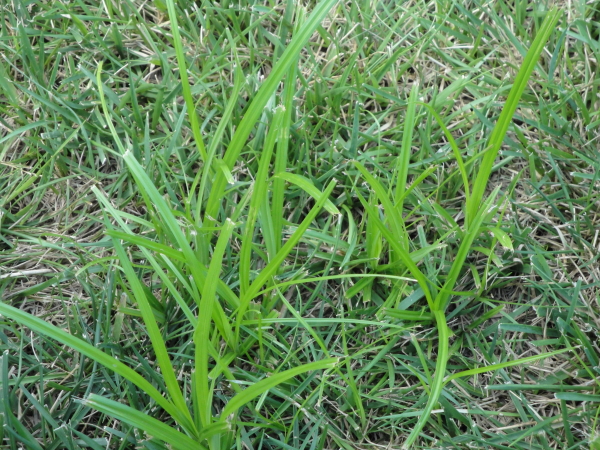
What Is the Fastest Way to Get Rid of Nutsedge in Your Lawn?
To get rid of nutsedge permanently, you must destroy its underground root network using specialized selective post-emergent herbicides containing active ingredients like halosulfuron-methyl or sulfentrazone. Traditional weed killers and manual pulling completely fail because they do not kill the subterranean tubers, commonly called nutlets. These buried survival pods sprout aggressively when stressed, causing the weed to multiply rapidly. For complete eradication, apply a targeted sedge control treatment twice, spaced two to four weeks apart, while simultaneously correcting poor soil drainage and raising your mowing height to choke out future growth.
What Is Nutsedge and Why Is It Overtaking Your Yard?
Nutsedge is an aggressive, warm-season perennial weed that belongs to the sedge family (Cyperaceae). Most homeowners recognize it by its common nicknames, nutgrass or watergrass. Because it is not true grass, standard lawn care products and traditional broadleaf weed killers have absolutely no effect on it.
This stubborn weed thrives during hot, humid summer weather and prefers areas with full, direct sunshine. The most frustrating characteristic of nutsedge is its unbelievable growth rate. It routinely grows twice as fast as desirable residential turfgrasses like Bluegrass, Fescue, or Ryegrass.
If you mow your lawn on a Saturday, this vibrant weed will tower over your manicured grass by Tuesday morning. This uneven growth creates a messy, unkempt appearance across your property. To reclaim your yard, you must look past the visible blades and understand the botanical nature of the plant.
How Can You Correctly Identify Nutsedge?
You can identify nutsedge by checking for a distinct three-sided stem, a bright lime-green color, and a stiff, waxy leaf texture. Spotting this invasive weed early prevents isolated patches from taking over your entire property. You can easily differentiate it from standard lawn grasses by observing three specific physical characteristics.
Why Does the Triangular Stem Matter for Identification?
The absolute most reliable way to identify nutsedge is by examining the shape of its stem. Pick a single stalk from your lawn and roll it firmly between your fingertips. You will instantly feel a distinct, three-sided triangular shape with sharp edges. True lawn grasses possess flat or rounded stems, whereas all members of the sedge family feature these unmistakable three-sided profiles.
How Do the Color and Leaf Structure Stand Out?
Nutsedge leaves display a bright, distinct lime-green or yellowish-green hue. This neon shade contrasts sharply against the darker, rich green tones of a healthy lawn. Furthermore, the leaves grow upward in pairs from the base, creating a highly visible V-shaped channel that runs directly down the center of each blade.
What Does the Leaf Texture Feel Like?
If you run your fingers along a nutsedge blade, you will notice that it feels exceptionally slick, stiff, and rigid. The leaves possess a thick, shiny, waxy outer coating called a cuticle. This protective armor acts as a shield, causing most generic liquid weed killers to slide right off the surface without being absorbed by the plant.
Why Is Nutsedge So Difficult to Control and Eliminate?
Nutsedge is incredibly difficult to eliminate because it bypasses spring pre-emergent barriers and relies on an extensive underground network of survival tubers. Standard preventative lawn care routines offer zero protection against this specific family of weeds.
Why Do Spring Pre-Emergents Completely Fail?
Traditional spring pre-emergent liquids provide no defense against nutsedge because they are designed to block annual seeds from germinating. For example, crabgrass reproduces strictly via seeds dropped in the soil each year. Nutsedge, conversely, is a perennial plant that arises from an established, pre-existing underground root system. Because these roots are already alive beneath the surface, early spring barriers have nothing to block or interrupt.
What Is the Hidden Underground Network?
The root architecture of a mature nutsedge plant is highly complex and expansive. It consists of multiple creeping, horizontal roots called rhizomes that tunnel extensively beneath your soil. These hidden tunnels spread silently throughout your yard, connecting a single visible green stalk to dozens of adjacent plants.
At the tips of these underground rhizomes, the plant develops multiple starch-storing bulbs known as tubers or nutlets. These buried nutlets act as heavy-duty survival pods. Most importantly, they hold enough energy to remain dormant in the soil for several years, waiting for the perfect warm, soggy conditions to emerge.
Why Should You Never Pull Nutsedge by Hand?
You should never pull nutsedge by hand because the physical tension triggers a powerful survival mechanism that causes the underground tubers to multiply. Hand-pulling is the absolute worst mistake a homeowner can make when dealing with sedges.
It is physically impossible to extract a mature nutsedge plant with its entire root system intact. The subterranean rhizomes are incredibly fragile and deeply anchored in the dirt. When you pull the visible top blades, the root system snaps instantly.
Consequently, this sudden break detaches the hidden tubers from the main stalk. Once a tuber is severed, it interprets the disconnection as an emergency signal to reproduce. The dormant nutlets wake up immediately. For every single nutsedge stalk you pull out of the ground, the broken root network can rapidly send up ten or more aggressive new shoots a few weeks later.
Suppressing vs. Killing Nutsedge: What Actually Works?
To permanently kill nutsedge, you must use specialized selective post-emergent herbicides that penetrate the waxy leaf coating and travel deep into the root system. Most cheap weed control products found at local big-box stores are formulated to merely suppress weeds rather than eradicate them.
What Is the Illusion of Weed Suppression?
Generic retail weed killers only create a temporary illusion of success. When you apply these products, the chemical may cause the top leaves to turn brown, wither, and appear dead. However, the liquid fails to penetrate the protective waxy layer or travel down into the rhizomes. The underground tubers remain completely healthy and unharmed. Once the chemical wears off, those buried pods will push fresh, aggressive growth back through the surface.
Should You Use Non-Selective Herbicides?
You can completely destroy nutsedge using a non-selective herbicide like glyphosate, but it will also kill every single plant it touches. Glyphosate systematically travels down to the deepest roots and tubers. Unfortunately, it will also wipe out your desirable lawn grass. This leaves large, dead brown patches across your property, making it a viable option only for empty landscape beds or areas targeted for complete lawn renovation.
How Do Advanced Selective Herbicides Eradicate Sedges?
Advanced selective post-emergent herbicides eliminate nutsedge completely without harming your surrounding turfgrass. Modern chemical advancements have introduced specific active ingredients, such as halosulfuron-methyl or sulfentrazone, which are engineered specifically for sedge termination.
These professional-grade products dissolve the waxy outer layer of the leaf, allowing the chemical to enter the plant's vascular system. The herbicide then travels all the way down the stem, systematically poisoning the rhizomes and killing the attached underground tubers. Because nutsedge sprouts at different intervals throughout the summer, achieving total eradication typically requires two precise applications spaced two to four weeks apart.
How Can You Prevent Nutsedge Outbreaks Long-Term?
To prevent nutsedge long-term, you must alter the environmental conditions of your property to eliminate the excess moisture and open space that this weed requires to thrive. Chemical treatments wipe out the weeds actively growing today, but cultural practices stop next year's outbreak.
How Do You Correct Standing Water and Poor Drainage?
Nutsedge is a water-loving plant that thrives in soggy environments. Low-lying areas, tire ruts, heavy clay soils, and zones with poor drainage are the first places where nutgrass appears year after year. To stop the cycle, you must fix these underlying drainage issues. You can fill low spots with high-quality topsoil or install a French drain system to redirect excess water away from your turf.
How Should You Adjust Your Irrigation Habits?
Oversaturating your lawn creates an ideal breeding ground for invading sedges. Avoid watering your lawn with short, daily irrigation cycles that keep the top layer of soil perpetually wet. Instead, transition to a deep and infrequent watering schedule. Water heavily once or twice a week to thoroughly soak the root zone, then allow the surface soil to dry out completely before watering again.
Why Should You Raise Your Lawnmower Blade?
Mowing your grass too short stresses the turf and exposes the soil to direct sunlight. To defend against weeds, raise your lawnmower blade to a setting between 3.5 and 4 inches during the hot summer months. Taller grass blades cast a deep, cooling shadow across the soil surface. This shade blocks the direct sunlight that dormant nutsedge tubers require to stimulate germination.
Why Commit to Annual Aeration and Seeding?
A thick, dense lawn is your single best natural defense against any weed infestation. Compacted, bare soil provides the perfect opening for invading summer weeds to take root. Scheduling an annual fall core aeration mechanically relieves soil compaction and improves water drainage. Following aeration immediately with a heavy overseeding fills in thin spots with fresh, competitive turf roots, leaving absolutely no physical space for nutsedge to take hold next season.
Key Takeaways: Nutsedge Control
- Feel for Triangular Stems: Identify nutsedge easily by its distinct three-sided stems, rapid vertical growth, and bright lime-green color that clashes with normal lawn grass.
- Stop Hand-Pulling Completely: Never pull nutsedge by hand, because breaking the fragile root system triggers dormant underground tubers to multiply and send up ten times more weeds.
- Apply Specialized Selective Controls: Avoid generic weed killers that merely injure top foliage; instead, use targeted selective post-emergent herbicides to systematically poison the buried tubers.
- Eliminate Excess Soil Moisture: Fix underlying drainage issues, fill in low-lying ruts, and switch to a deep, infrequent watering schedule to dry out the soggy environments that sedges prefer.
- Maintain a Dense Turf Shield: Prevent future infestations by mowing your grass high during the summer and performing annual fall core aeration and overseeding to crowd out dormant tubers.

