
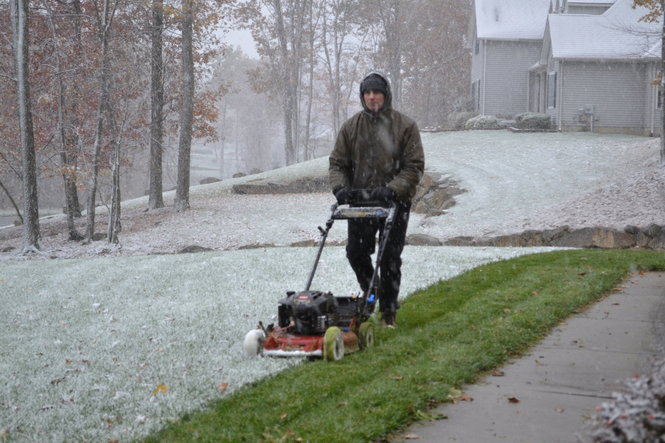
What Is a Winter Fertilizer Treatment and Why Does Your Lawn Need It?
A winter fertilizer treatment is a specialized lawn care application applied in late fall to feed your turf's root system before the ground freezes. Unlike spring applications that stimulate rapid blade growth, these late-season nitrogen treatments focus entirely on sub-surface development. This critical feeding delivers a precise blend of nutrients that the grass stores internally during the cold months. Consequently, your lawn builds the essential energy reserves needed to survive harsh freezing temperatures, resist seasonal diseases, and achieve a rapid, vibrant green-up as soon as spring arrives.
When Is the Best Time to Apply This Final Treatment to Your Lawn?
You should apply this final lawn treatment in late fall, typically between late October and early December. The ideal timing coincides with the period when your grass blades stop growing upward but the roots remain highly active underneath the soil.
Applying the nutrients during this specific window ensures the plant stores the food instead of wasting it on new top growth. If you apply the treatment too early in the autumn, you might trigger a flush of tender green growth. This weak foliage will easily suffer damage from the first hard frost.
Conversely, applying the nutrients too late after the ground completely freezes means the roots cannot absorb anything. Therefore, monitoring local soil temperatures and watching for the final mow of the season will help you nail the perfect execution window.
What Kind of Nitrogen Mix Makes the Best Late-Season Lawn Feeding?
The best late-season lawn feeding features a strategic blend of both fast-release and slow-release nitrogen. This dual-action formulation addresses the immediate recovery needs of your turf while simultaneously providing long-term protection through the coldest months.
How Does Fast-Release Nitrogen Help Summer Damage?
Fast-release nitrogen delivers an immediate boost of nutrients to help your lawn quickly repair itself from summer stress. Intense heat, seasonal droughts, and heavy foot traffic take a massive toll on your grass during the warmer months.
The instant availability of fast-release nitrogen allows the grass to efficiently build up carbohydrates right now. These carbohydrates act as a healing mechanism, patching up thin areas and strengthening weakened plant tissues before dormancy sets in.
How Does Slow-Release Nitrogen Support the Lawn Through Cold Months?
Slow-release nitrogen breaks down gradually over several weeks to continuously feed your lawn's root system during dormancy. Because the nutrients unlock at a measured pace, they provide a steady stream of sustenance that lasts all winter long.
This sustained feeding prevents nutrient deficiencies during extended periods of freezing weather. As a result, your turf maintains a baseline level of health and structural integrity without experiencing sudden, dangerous growth spikes in freezing weather.
What Happens to Your Grass Blades as Weather Gets Colder?
As the weather gets colder, your grass blades naturally slow down their growth, turn brown, and enter a protective state known as dormancy. This visual transformation represents the lawn's defensive mechanism against freezing temperatures, frost, and frozen precipitation.
The hardening of the grass blades preserves moisture and prevents cellular damage within the plant leaves. Do not worry when the vibrant green color fades into a dull brown hue. This change simply indicates that the grass is redirecting its vital energy away from the surface and down into its core.
What Is Happening Under the Soil During the Winter?
Under the soil, your lawn's root system experiences a massive growth surge, becoming much thicker, stronger, and deeper. While the top of the lawn looks completely dead and inactive, the subterranean environment remains highly productive.
The roots eagerly absorb moisture and nutrients from the late fall soil to expand their physical network. A dense, deep root matrix dramatically improves the turf's overall resilience. Consequently, building a superior root system in the winter directly dictates how well your lawn will withstand drought, heat stress, and fungal diseases during the following summer.
How Do Carbohydrates Protect Your Lawn from Seasonal Damage?
Carbohydrates protect your lawn by acting as an internal antifreeze and an energy bank that shields the grass from winter kill and disease. When the roots absorb late-season nitrogen, they convert these nutrients into complex sugars and carbohydrates.
These stored sugars lower the freezing point of the water inside the plant cells. Therefore, the grass can endure severe frost without its cell walls rupturing. Furthermore, healthy carbohydrate reserves prevent common winter fungal pathogens, such as snow mold, from decimating your turf under seasonal snow cover.
Why Does Late Fall Fertilization Promote a Quicker Spring Green-Up?
Late fall fertilization promotes a quicker spring green-up because it fills the plant's storage tissues with readily available energy for the early spring waking cycle. When soil temperatures rise in March and April, your grass does not have to wait for new nutrients to dissolve.
Instead, the roots immediately tap into the stored winter carbohydrates to jumpstart growth. This internal jumpstart allows your yard to wake up weeks ahead of neighboring lawns. Most importantly, you achieve a lush, green carpet early in the season without forcing excessive top growth that requires constant mowing.
Why Should You Partner with a Professional Lawn Care Company?
You should partner with a professional lawn care company because certified technicians possess the regional expertise and calibrated equipment required to apply the exact nutrient ratios safely. Choosing the wrong product or applying it unevenly can easily burn your turf or pollute local waterways.
To find a company you can fully trust, look around your neighborhood to see who services the healthiest yards. Ask close friends or family members for their personal recommendations. Always research local service providers on the Better Business Bureau to check their reliability, licensing, and customer satisfaction history before signing a contract.
Key Takeaways: Winter Fertilizer
- Timing Matters Most: Apply your late-season nutrients between late October and early December when blade growth stops but root growth peaks.
- The Ideal Formula: Always use a balanced blend of fast-release nitrogen for immediate summer recovery and slow-release nitrogen for steady winter feeding.
- Sub-Surface Strength: Focus on the roots because a deep, thick root system directly protects your lawn from next summer’s droughts and diseases.
- Natural Antifreeze: Nutrient absorption builds essential carbohydrates that prevent grass cells from freezing and fracturing during hard frost.
- Early Spring Payoff: Storing nutrients in the late fall guarantees a faster, thicker, and more vibrant green-up when spring arrives.


